
Paid Advertising
In an increasingly online world, businesses everywhere are struggling to stand out in a crowded space. Choosing the right target audience, amount of ad spend, and channel for your industry are all things that take years to master. An expert team that lives and breathes paid advertising is the solution.





Advantages of Paid Advertising
At Surgeon’s Advisor, we strategically guide potential customers to your services with nearly 20 years of tried and tested experience. With well-crafted ads, we can capture the attention of your ideal potential customers, guide them to your page with compelling messaging, and convert them into paying customers. We accomplish this with unique, well-tested strategies that effectively communicate your unique value. Though the digital landscape may seem endless, paid ads can steer your business toward prosperity.
With the right team behind you, paid advertising can help your company achieve the success you are aiming for.
Investing in paid advertising can unlock a multitude of benefits for your business, regardless of the industry. From enhancing your online presence to driving high-quality traffic to your website, there are many advantages.
Strategic Targeting
Strategic targeting helps to reach the ideal audience. Defining audience characteristics like demographics, interests, and behaviors ensures ads are seen by those most likely interested in the product. Precise targeting can lead to higher engagement rates and an increase in potential customers.
Increased Brand Awareness
Paid ads boost the brand's online visibility - ads appear on popular platforms frequented by the target audience. They increase the frequency at which users see your brand, enhancing recognition and recall, and keeping your business at the forefront of the audience's minds. Greater brand awareness leads to more recognition, trust, and customer engagement.
Measurable ROI
Paid advertising is measurable - platforms provide comprehensive analytics like CTR, conversions, cost per action, click-through rates, conversions, ROI, and more. Analytics provide insights to refine strategies and maximize the advertising budget. The data collected provides insights into audience personas and behavior, while helping to tailor products and services.
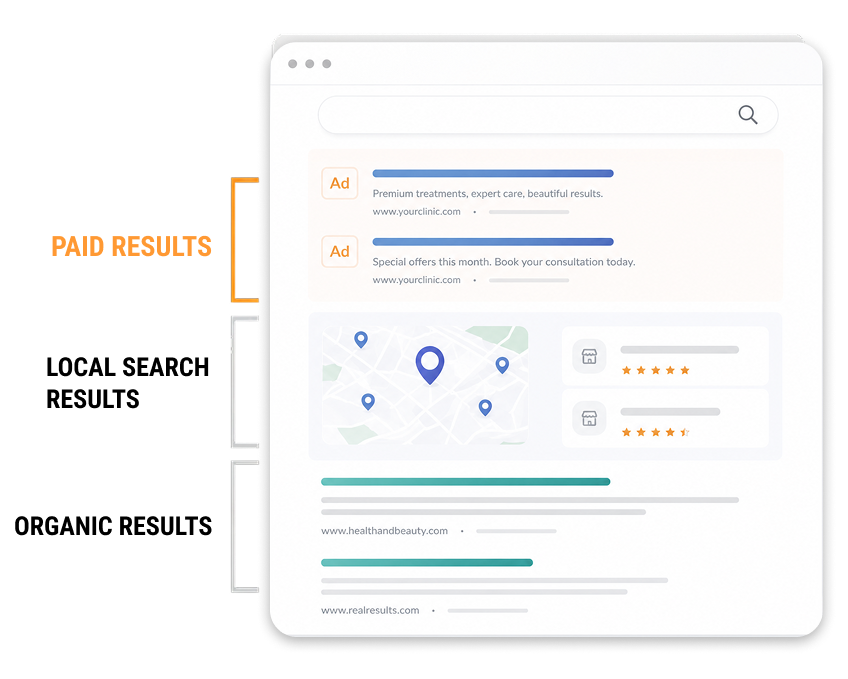
What is Paid Advertising?
Reach The Right Audience.
Convert More Customers.
How Paid Advertising Works
Paid advertising operates on a straightforward principle – you pay to have your ads displayed to your targeted audiences on selected platforms. The process begins with the creation of an ad that aligns with your brand and objectives. You then allocate a budget for your ad and decide where you want it to be displayed. This could be on search engines like Google, social media networks like Facebook, or other relevant websites.
When users initiate a search query related to your ad or meet your audience targeting criteria, your ad has the opportunity to be displayed. The visibility of your ad hinges on several factors, including the amount you bid, the quality of your ad, and the relevance of your ad to the user’s search intent. If a user clicks on your ad, they will be directed to your website or a dedicated landing page. You pay the advertising platform each time a user clicks on your ad, hence the term “pay-per-click.”
Display Ads
- Appear on third-party websites in various formats – banners, sidebars, pop-ups
- Include text, images, and video to increase brand awareness and reach a wide audience
- Offer targeting options to ensure ads are seen by users likely interested in services
Social Media Ads
- Appear on platforms with vast user bases to reach potential customers
- Can appear in feeds, stories, dedicated ad spaces in text, image, video, or interactive formats
- Allow precise audience targeting based on interests, behaviors, demographics
- Increased likelihood of engagement and conversions due to precise targeting
Pay-Per-Click
- Pay a fee when someone clicks on your ad
- Buy visits to your site rather than earn them organically
- Commonly associated with search engines like Google
- The ad appears above organic results for relevant search queries
- Visibility is determined by a bidding system – you decide the max bid per click
- Highly effective for driving quality traffic to your site
- Targets users who actively searching for your services
Video Advertising
- Incorporate video into digital advertisements
- Can be displayed on platforms like YouTube, Facebook, Instagram, and search results
- Offer dynamic, engaging ways to communicate a message
- Significantly increase brand awareness and conversion rates
- Range from short promotional clips to longer, informative content
- Effective across all industries to explain processes, showcase outcomes, introduce team members
Influencer Marketing
- Leverages the reach and credibility of popular individuals (influencers)
- Influencers have substantial social media followings and are seen as experts in their niche
- Partnering with relevant influencers taps into their audience
- Highly effective – capitalizes on trust/relationship between influencers and followers
- Influencer recommendations come across as trusted advice rather than an advertisement
Native Advertising
- Match the look, feel, and function of the media format where they appear
- Found in social feeds, often as “recommended content” and don’t look like typical ads
- Designed to blend in with surrounding content for a non-disruptive experience
- Can include articles, infographics, videos, and more
- An effective way to subtly promote services while providing valuable content
Remarketing
- Targets individuals who previously interacted with the website/app
- Reconnects with users who showed interest but didn’t convert
- Works by placing cookies on visitors’ devices that meet the criteria for a remarketing audience list
- Ads created are shown only to the remarketing list when browsing
- Keeps brand top of mind and encourages return visits
- Increases chances of conversion
Microsoft Ads
- Microsoft Ads (formerly Bing Ads) is a valuable paid advertising platform
- Reaches millions of unique searchers not using Google
- Less competitive, and more cost-effective than Google Ads
- Uses pay-per-click model – bid on keywords related to services
- Ads appear on Bing, Yahoo, and partner sites
- Taps into substantial audience overlooked by competitors
- An effective addition to the paid advertising strategy
Email Marketing
- Involves sending emails to a list of interested individuals
- Can serve various purposes – promoting new services, sharing testimonials, offering discounts
- Personalized messages and audience segmentation drive engagement
- Offers high return on investment, cost-effective paid advertising
- Powerful addition to overall strategy when used strategically
Different Types of Paid Advertising
Paid advertising encompasses a wide range of formats, each offering unique benefits. Understanding the different types of paid advertising can help you choose the most suitable options for your business, regardless of the industry.

How Much Should I Spend on Paid Advertising?
Determining the right budget for your paid advertising can be challenging. The amount you should spend depends on several things, including your business goals, the competitiveness of your industry, and the platforms you’re using. A good starting point is to define what you hope to achieve with your paid advertising.
Are you looking to increase brand awareness, drive website traffic, or generate leads? Once you have clear objectives, you can allocate your budget based on the platforms and ad types that align best with these goals. Remember, paid advertising is not a one-size-fits-all approach. It requires ongoing management and optimization to ensure your investment is yielding a positive return.
What Are the Results of Paid Advertising?
- Increased Website Traffic: Paid advertising can significantly boost your website traffic by positioning your ads in front of a targeted audience. This can lead to more inquiries and, ultimately, more customers.
- Enhanced Brand Awareness: With strategic targeting and creative ad designs, paid advertising can increase visibility and recognition for your business.
- Lead Generation: Paid ads can drive potential customers to take specific actions, such as filling out a contact form, downloading a resource, or calling for a customized quote. These leads can then be nurtured through email marketing or remarketing campaigns.
- Measurable ROI: One of the key advantages of paid advertising is its measurability. Platforms like Google Ads and Facebook Ads provide detailed analytics, allowing you to track the performance of your campaigns and measure your return on investment.
Our Paid Advertising Expertise
Accountable
Transparent tracking
We provide transparent tracking and reporting, and you have full access and control of your account. We believe in full accountability for the time worked and results delivered.
Risk-Free
No long-term contracts
Our company operates with no long-term contracts. You own all of the work, and in our ticketing system your requests are processed in hours, not weeks.
ROI-Driven
Our methods are based on performance. We audit marketing efforts, benchmark key performance indicators, create an improvement plan, and make changes to improve ROI.
OUR CLIENTS
“Website looks amazing, great job!
It’s really Impressive.”
“Hiring Surgeon’s Advisor is a
no-brainer.”
“Surgeons Advisor has been fantastic to work with. I really appreciate their service and recommend them without reservation.”
“I have been with SA for 14 years. They are a solid company and they know what they are doing. I consider them family!”
FAQs about Paid Advertising
What's the difference between SEO and paid advertising?
SEO (Search Engine Optimization) involves optimizing a website's content, design, and technical elements to improve its organic search ranking. Its goal is to attract visitors who find the site naturally through search engines. SEO requires time to see results, but the effects are longer lasting.
Paid advertising entails paying to display ads on search engines, social media, and other sites. Its goal is to drive immediate traffic and conversions by reaching a target audience quickly. However, paid ads depend on ongoing ad spend, and the effects are typically short-lived.
Is paid advertising worth it?
Paid advertising can be a highly effective strategy for driving traffic, increasing visibility, and generating leads. It allows you to reach a specific target audience quickly and provides measurable results, making it easier to track ROI.
However, the value of paid advertising hinges on several things, which include your business objectives, financial resources, and the level of competition within your industry. It also requires ongoing management and optimization to ensure your investment is producing a positive return. So, while paid advertising can be worth the investment, it's essential to approach it strategically and monitor your campaigns closely.
What is the average cost of paid advertising?
The cost of paid advertising can vary widely depending on the advertising platform, industry, competition, ad format, and targeting. An average CPC in Google is $0.65, but it can be more expensive based on how competitive is the term. Smaller or more niche markets may have lower advertising costs, while highly competitive industries may have higher costs.
Keep in mind that the objective of paid advertising extends beyond merely attracting traffic - it's about generating conversions. To assess the overall success of your paid advertisement campaigns, you should consider both metrics: CPC to control and optimize your advertising costs, and CPA to measure the effectiveness of your advertising in achieving your specific business objectives.
How long until I see the results of paid advertising campaigns?
The timeline for seeing results from paid advertising campaigns varies on a multitude of factors. The platforms used, such as Google Ads, Facebook Ads, or other social media networks, play a significant role. Each platform has its own unique audience personas and advertising options, which can influence the speed and type of results you see.
Your specific objectives also impact the timeline. Whether your goals are broad terms like increasing brand awareness or more specific goals like boosting conversion rates or app installs, these will dictate the type of campaign and content types you use, further influencing the timeline.